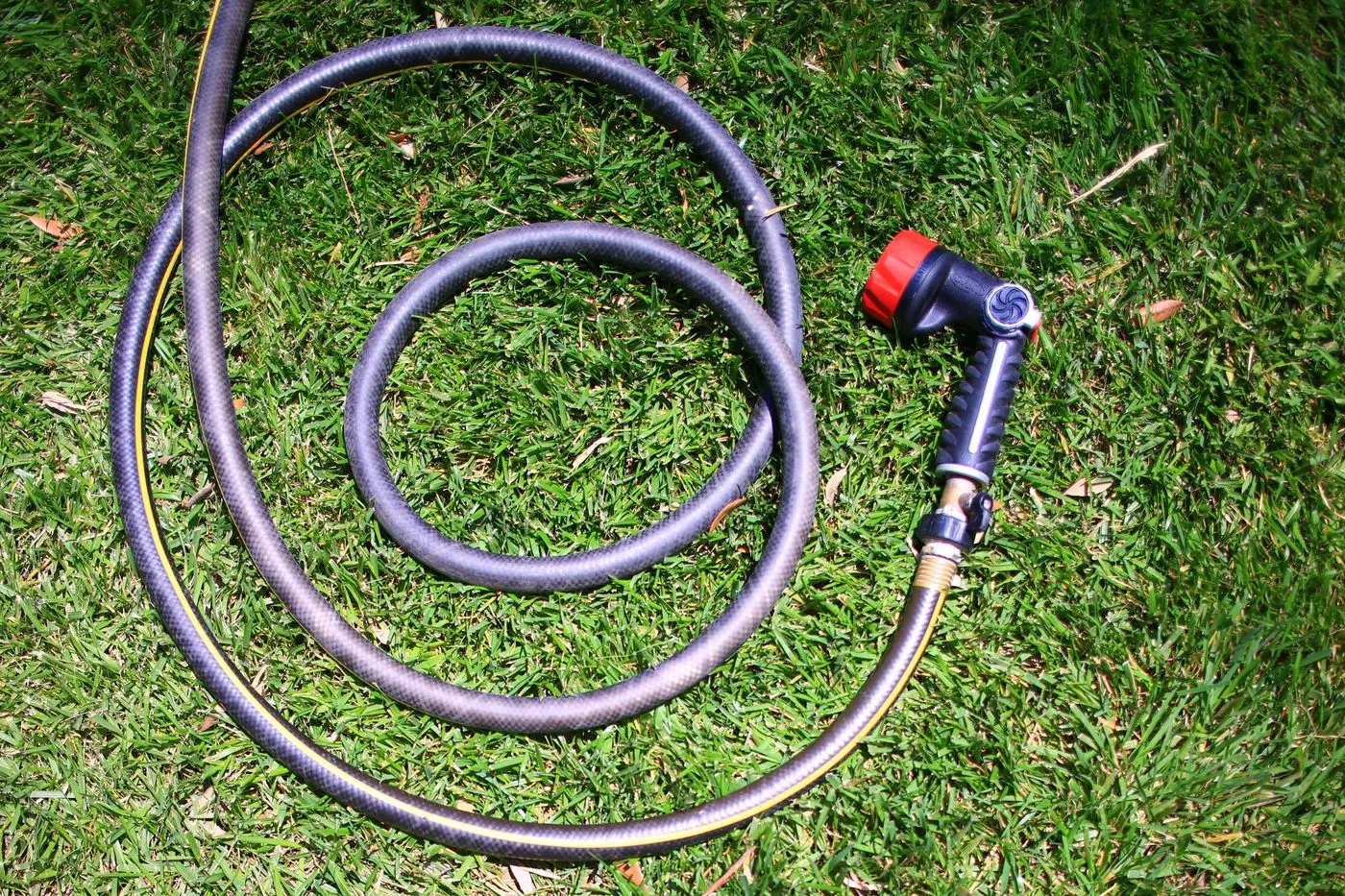
A water meter makes the hose a line on a bill. Older households remember unmetered rates and a summer of sprinklers that belonged to the season rather than to a number. Newer ones grew up with a dial that moves, a smart display in a cupboard, a shock envelope after a wet winter that nobody read. BodyGrove's analysis is that cultural shift, not a lecture on showers. A dry lawn is now a bill as well as a weather story. Neighbours compare both.
Hosepipe bans still arrive as a public weather drama: a notice, a headline, a garden centre suddenly full of butts, a street that looks at hanging baskets with a new suspicion. Meters make the drama personal even in a wet county. The ban is a rule. The meter is a mirror. Together they turn a garden into a household argument at the tap: who watered, who forgot a drip, who filled a paddling pool, who is growing food rather than a lawn. Facebook groups that used to share courgette gluts now share photographs of other people's sprinklers.
The hose became the moral object
Gardening is a food-system hobby for some and an appearance hobby for others. Both use water. Policy that shames only the hanging basket misses the leaky main. Leakage remains the unglamorous twin of the hose. A hosepipe ban that ignores leaks trains cynicism. Readers are not wrong to hold both in mind. A road that weeps water beside a banned sprinkler is how a policy loses a street. The weeping is not a rumour. It is a civic object. It belongs beside the tap.
Allotments often have a standpipe with a different rule, a trough, a culture of cans rather than oscillating sprinklers. The domestic hose became the moral object because it is visible from the pavement. Visibility is not hydrology. A food bed that looks dry and a lawn that looks proud can use water in ways a passer-by cannot rank. Leaflets that only say save will be read as a scold. Scolds do not cut use as well as a visible number and a fair exception.
Shock bills and ordinary time
A meter that is unread for months then arrives as a shock bill trains the wrong lesson. People remember the envelope, not the wet winter they had already paid for. Companies that want trust have to make the number visible in ordinary time, not only in a drought headline. Drought headlines are late. Garden culture changed anyway: butts, a neighbour who waters at dusk, a brown lawn that some streets now treat as sense and others as neglect. Report that as local life. Keep the mains leak in the same piece, because shaming a hose while a road weeps is already a side.
A lawn is not a crime. A leaky main is not a lifestyle.
A dry summer is not only a lifestyle inconvenience. It is a systems test that still gets reported as a barbecue risk: reservoirs in one sentence, a paddling pool in the next, a leaking main nowhere in the piece. The objects together — meter, main, reservoir, neighbour, standpipe — because the meeting only works if all of them are in the room. The leaflet that only says save has already sent the main out into the corridor.
Two dialects of the same policy
Climate plans talk about demand. Gardeners talk about a brown lawn and a judgemental street. Those are the same policy in two dialects. Large households, medical needs, a garden that is actually a food bed: those cases need a sentence in the leaflet. Metering is not automatically fairness. Unmetered memory is not automatically waste. The meeting between them is the bill, the ban, and the road that still weeps. Water is civic. Gardens are culture. Bills are where they meet.
We will not invent reservoir levels or leakage percentages. Water companies and regulators publish those, with definitions that move. Our beat is the hose, the bill, the neighbour, the standpipe, and the policy that still arrives as weather. A dry month is not merely a spoiled barbecue. It is a systems test that still gets filmed as a paddling-pool risk. The longer visit starts when the number is shown in ordinary time, and when the leaking main is allowed to stand beside the banned sprinkler without a sermon about grass.