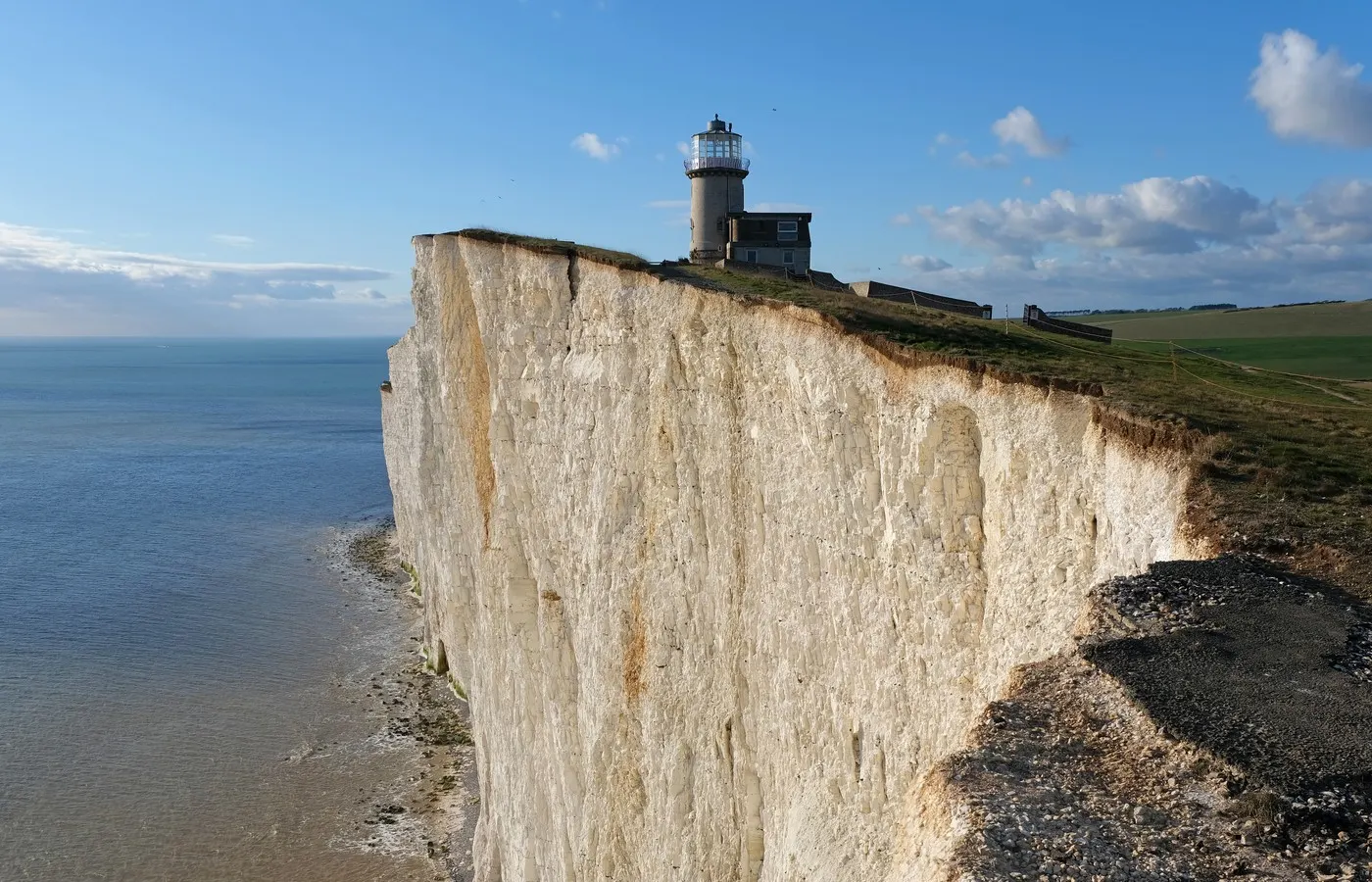

A headland walk looks fixed on a tourist map. On the ground it is a moving object. After a wet winter the walking line often sits inland of last year's photograph, marked by diversion tape, a new stile and a fence that was not on the postcard. Walkers still arrive with the old view in a pocket or on a phone. The gap between those two editions is now the real story of the British coast path: not a sunset, and not millimetres invented for drama, but a works order that lags the cliff.
Visitor numbers rose on famous stretches through a decade of staycations, social posts and a public that learned to treat a headland as a day out. Boots and weather share the wear. Neither is a villain on its own. Saturated ground, freeze-thaw and a dry summer that dusts a path into a chute do as much as a bank-holiday queue. Landowners, path authorities and local rescue teams then share the inbox. Analysis that picks only one of those has already lost the coast.
The map that keeps moving
Diversion tape and a new fence are the honest edition of the map. A closed section that stays closed for two seasons becomes a rumour. Walkers then invent their own line, which is how a cornice gets a desire path. Honest, funded realignment is slower and safer. It also looks like a failure on a tourist board because the old cliff has vanished from the walk. Leaflets that still show the vanished cliff are part of the risk, not a souvenir.
Two maps now walk the same cliff: the local winter line and the app's summer trace. They meet at a pinch-point and call it rudeness. It is cartography. Local walkers know where the ground went. Weekend visitors arrive with a blue line that still hugs the edge. Conflict at a stile is often two datasets colliding, not a failure of manners. Signage that lags the ground trains people to ignore the next sign. A stile that dumps you into a field with no onward mark is how a national trail becomes a local argument.
A closed gate can be the accurate edition of the coast.
Who owns the inbox
Landowners, path authorities and parish clerks share an inbox and not a budget. A fence that moves inland is a works order with three letterheads. Letterheads delay. Delay is how a desire path starts. Rescue teams already know the famous corners. Their call-outs after a bright, windy day sit in the visitor economy's shadow ledger. A path that is free at the stile is not free at the helicopter. That sentence belongs next to the ice-cream queue, not in a separate tragedy file.
Reprinting is unglamorous. It is also how a public path stays public. Agencies already measure loss; millimetres are not a figure this page will mint. The question worth asking is which body reprints the leaflet after the cliff goes, who pays for the fence, and who still sells the old view because the old view still sells. Selling last winter's cliff is not hospitality. It is a risk with a logo.
The car park is already a policy
Car parks are the quiet throttle. A full headland at noon is a path-design problem created inland. More spaces can mean more boots on a thinning edge. Overflow on a bank holiday is a management tool whether anyone admits it. Close it and you thin the boots. Open it and you print more diversions. Tourism officers already know this. Leaflets still sell the capacity of a dry July. Capacity is a land story. A desire line through wet grass becomes a trench, then a complaint, then another length of tape.
Local businesses need the walkers. They also need the walkers not to stand on a cornice for a photograph. Those two needs share a Saturday and often a single warden. Ice-cream, a car-park ticket and a view are one afternoon's economy. The same afternoon can generate a call-out. Parishes can love the path and still dread August. That dread is not hostility to visitors. It is the knowledge that one thinning edge cannot take every car the inland roads can deliver.
Access still matters. So does not walking a cornice. The adult version of this story is signage, funded realignment and a public that accepts a longer route. A fenced field that becomes the new path is a negotiation, not a line on a tourist map. Rights of way, roll-back agreements and a landowner who will still let the line move inland are the unglamorous stack. Scenery does not get a winter gang. A public path sometimes does.
A coast path is not a poster. It is tape, a leaflet and a car park acting as one system. The postcard will keep being sold. The useful question is whether the works order, the reprint and the overflow are sold with it — or whether the next stile still dumps a summer app onto last winter's cliff.