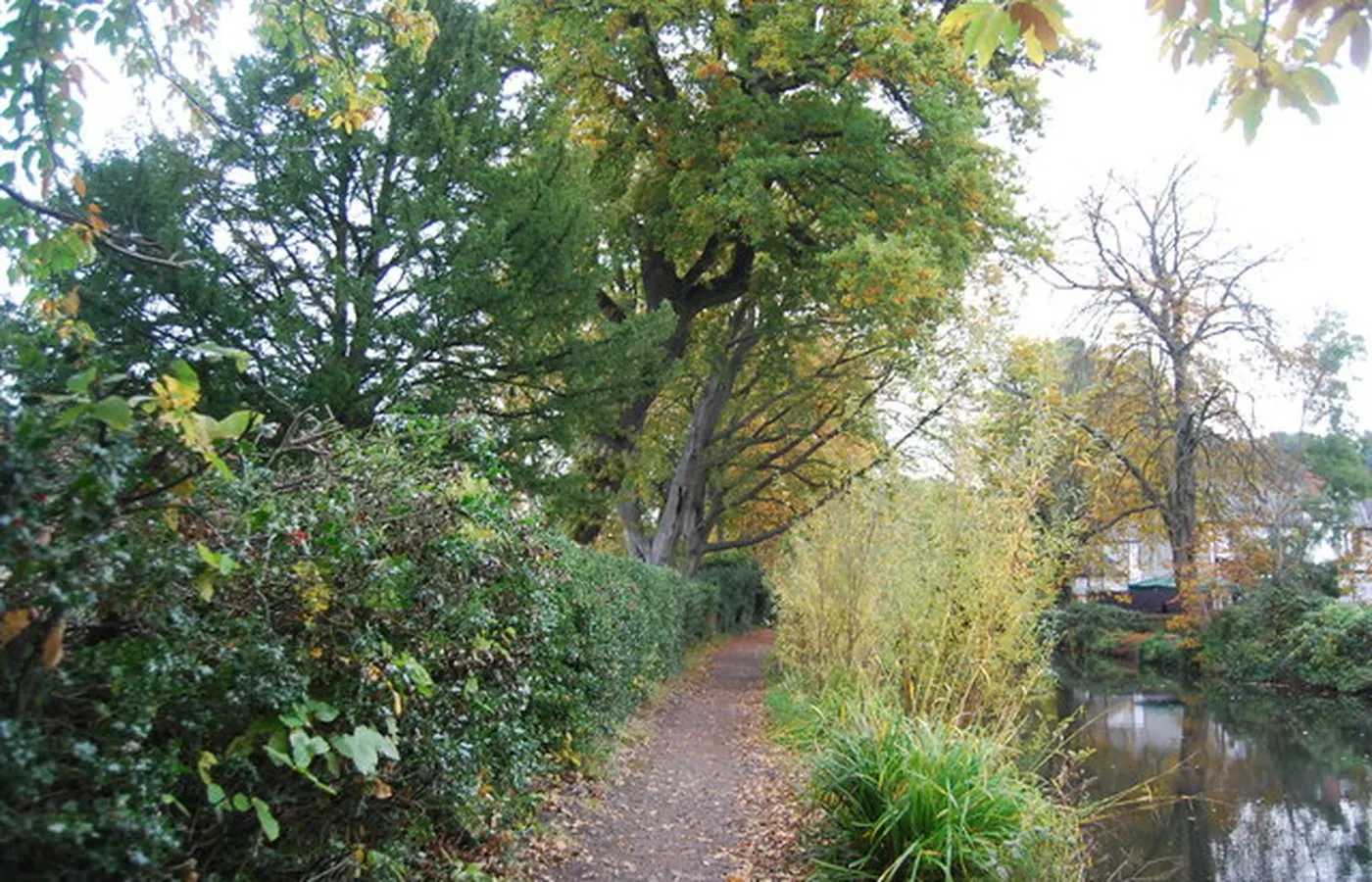

On a dry Tuesday in late September the towpath fills before the shops do. Office bags, school jumpers and delivery bikes share a strip of tarmac that was built for barges. The high street, a street away, still has its shutters down. You can stand on a lock bridge at a quarter past five and watch a town rearrange itself without a meeting. The precinct keeps the units. The water keeps the feet.
BodyGrove walks these paths as ordinary UK infrastructure, not as a wellness trail. Councils already publish vacancy counts for retail. Fewer people talk about where those missing pedestrians actually go. They did not vanish into a spreadsheet. They found a linear room that does not ask for a purchase, a parking ticket or a smile from a security guard. That room happens to be a canal bank.
Why the path fills before the shops
A towpath does not take business rates in the same way a unit does. It also does not take a manager, a till or a heating bill. That is part of its pull. It is free, lit in patches, and it connects housing to stations without a car. For a household finishing a shift, that combination is not a lifestyle choice. It is the shortest dry-ish line between a front door and a platform, or between a school gate and a kitchen that still needs a meal.
Evening trade followed the feet. A hatch selling coffee at a bridge, a boat cafe with a chalkboard, a lock-side bench that became a meeting point: none of that replaces a butcher. It does explain why the precinct's half-past-five hush feels harsher than the vacancy count. Vacancy is a stock of empty floors. Hush is a flow of people who stopped arriving. The canal took the flow.
Some towns now file the canal as a visitor asset and forget the commute. Signage for tourists sits next to a desire line used by night-shift nurses. The postcard can wait. The commute cannot. A mile that works at noon for a hired day-boat and fails at dusk for a walker with a buggy is not a successful public strip. It is a seasonal exhibit with a weekday job it has not been funded to do.
A mile with too many owners
Ask who owns a mile of towpath and you get a stack of answers. A navigation trust may hold the water. A council holds some of the lighting. A housing association holds a fence. A cafe lease holds a bin store that overflows onto the bank. The walker only knows whether the puddle is passable. That gap between the organogram and the puddle is the whole civic story.
The path is not a lifestyle brand. It is a public strip doing retail's old job of gathering people.
The tension is maintenance. Surface repairs, lighting and conflict between bikes and prams sit with mixed agencies. Readers tell us they choose the canal because the precinct feels empty, then complain the canal feels crowded. Both can be true on the same evening. Crowding is what a successful high street used to look like. The difference is that a high street had a cleaning contract, a lighting column and someone whose job was the kerb.
Shared width, old manners
Cyclists and pedestrians argue in the same WhatsApp groups that once argued about parking. Speed, bells and shared width are the new high-street manners. A painted line helps until two cargo bikes meet a double buggy. Then the line is a rumour and the argument returns to who should give way. Paint is cheap. Width is not. Width was drawn for a horse.
If a regeneration board still draws people into a covered mall that closed years ago, it is drawing the wrong diagram. Count the towpath at a quarter past six on a dry weekday. That is the current map of where a town still gathers after work. The remaining question is not whether the crowd exists. It is whether anyone will fund the mile as a street instead of as scenery with puddles.