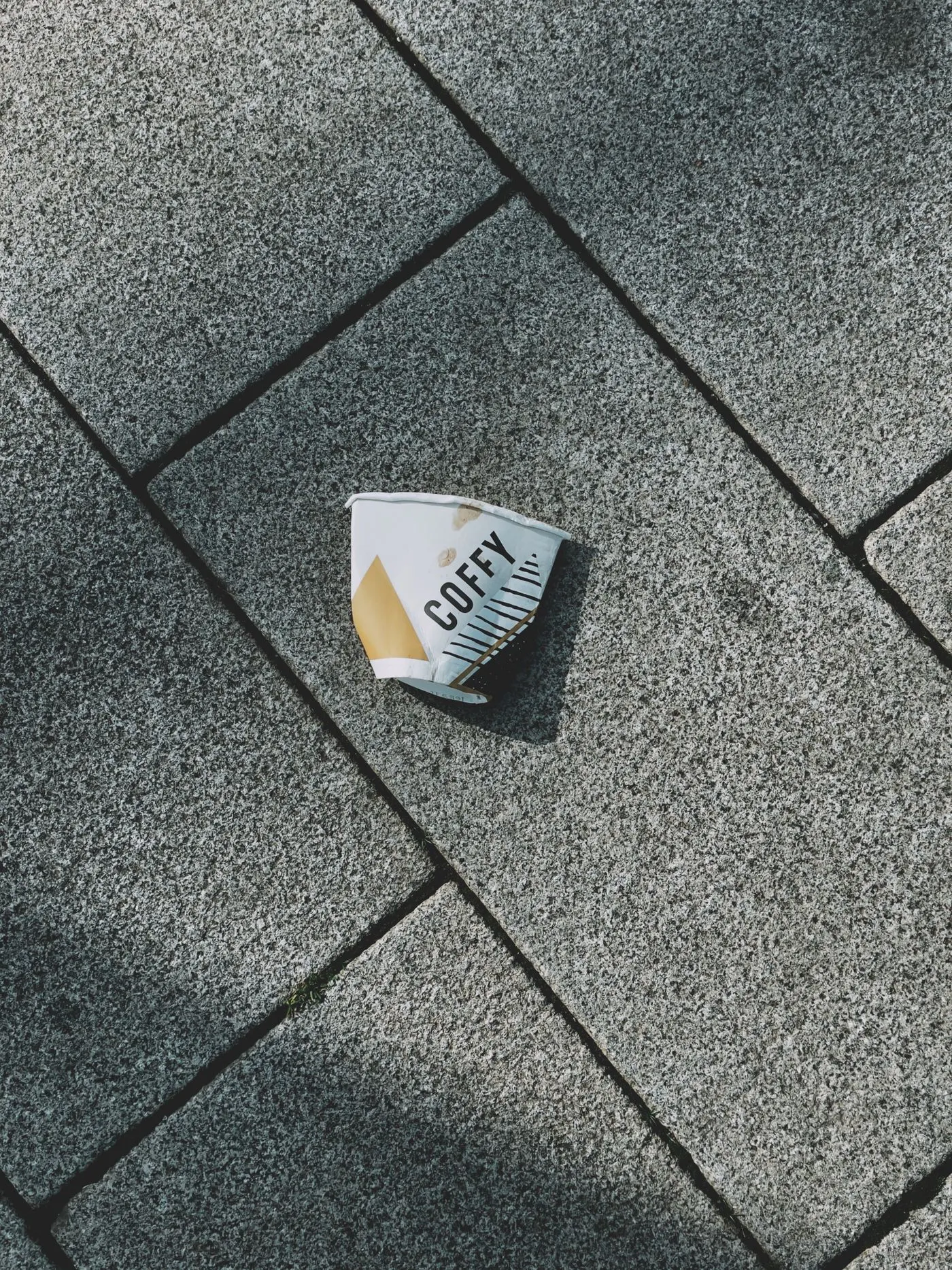
The sit-down breakfast has not vanished. It has become a weekend booking. Weekdays belong to the lid, the bag and the walk to the platform. This is culture because it rewrites the first conversation of the day. It happens in a queue, not over a teapot. Independent counters and chain kiosks share the same pavement language even when they do not share a queue. Morning hospitality left the house and did not fully enter the cafe. It learned to travel.
BodyGrove is not a restaurant guide and not a diet page. We notice the street furniture: bins that overflow by 9.15, a ledge that became a table, a bus stop that smells of espresso. Food systems hide in that cup — milk contracts, oat drinks, lids that may or may not be collected. The cultural fact is simpler. The British breakfast used to be a small committee at a table. It is now a procession. Processions need bins, and they need a place to pause without buying a second cup.
The first metre of the day
Councils argue about A-boards and pavement licences. Those arguments are really about who owns the first metre of the day. A clear pavement is also a breakfast table now. Neighbours who live above the ledge live with that decision at 7am. Fairness here is hours and sweeping, not a war about coffee. Office kitchens absorbed some of the old toast. So did the car. The pavement took the rest because trains do not wait for a second slice.
Independent bakers still sell a morning that looks like a shop. The queue is slower and the bag is paper. Chains sell speed and a logo. Both are readable on a walk to the platform. Towns that kept a room where a wet worker can sit down with a pot of tea kept a landmark. Treat it as one. Towns that outsourced morning entirely to a window and a bin changed the social weather before 8am. That is local life, not a review of foam.
The lid changed speech
You can walk and talk. You cannot easily share. The procession is efficient and slightly lonely, which is a cultural weather as much as a retail one. A ledge that became a table is a compromise: you can put the cup down, you cannot really gather. Bus shelters that smell of espresso are the same compromise at a timetable. The weekend table still matters. It is no longer the working week's opening scene.
Morning left the teapot and learned to travel. Bins, ledges, a room that still serves a pot of tea: the first metre of the day is now a street. Cups are a timetable printed on the kerb, complete with the overflow.
Pavement licences that appeared after the pandemic stayed because the morning had already moved outside. Some of those tables are lunch. The early ones are breakfast that refused to go back indoors. Sweeping, a bin contract, a neighbour's sleep: those are the adult documents of a cultural shift that looks, from a passing car, like litter. Litter is the symptom. The shift is a timetable.
- Whether a wet worker can still sit down with a pot of tea, or only stand at a window.
- Whether bins are emptied as a morning contract, or left to become the 9.15 photograph.
- Whether pavement licences come with hours and sweeping, not only with tables.
- Whether the slow paper-bag shop still exists beside the fast logo.
- Whether the ledge is treated as furniture of the day, or as a complaint about coffee.
A procession still needs a pause
Collection that depends on a consumer's virtue will fail on a wet Tuesday. Bins and a contract are the adult version. Virtue is the poster. The longer walk stays with the kerb as a timetable: which high streets kept a sit-down room, which kept only a hatch, how milk and cups sit inside the same walk, and why a town's first conversation now happens in a queue that will not wait for toast.
Weekend bookings for a sit-down breakfast are the remainder of a social form. They matter. Reporting the procession without sneering at the table is the work. Cups are not a lifestyle brand. They are how towns now start, bins and all, on the way to a platform that will not hold the door.